Micro ATmega32U4-MU
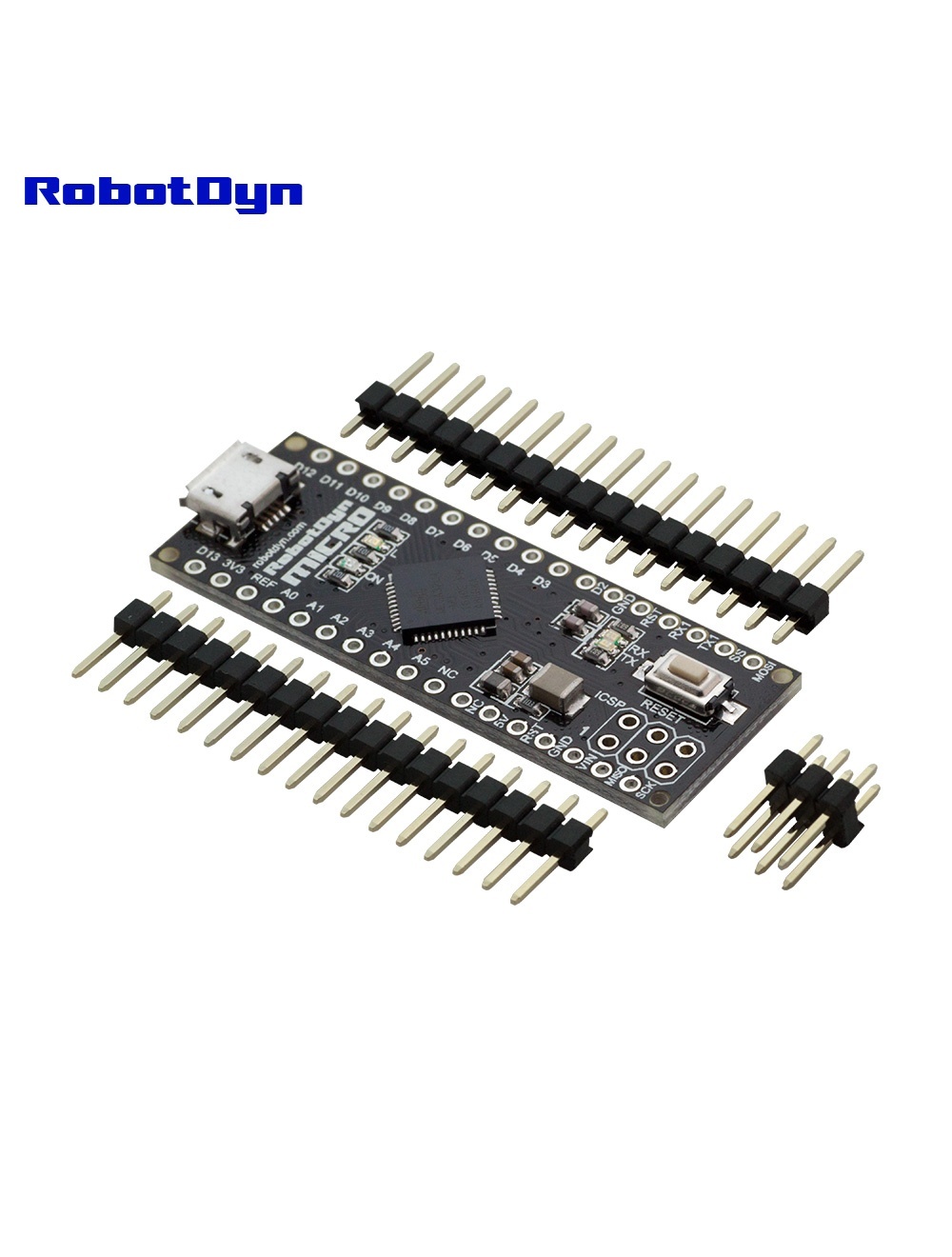
Überblick
ATmega2560-Board mit 16 MHz, 54 digitalen Pins (15 PWM), 16 analogen Eingängen, 4 Hardware-UARTs, 256 KB Flash. Für Projekte, die die UNO-Grenzen überschreiten — multiple Sensoren, multiple Schrittmotoren, komplexe TFT-Displays, 3D-Drucker (RAMPS), CNC-Controller.
Spezifikationen
| Spezifikation | Wert |
|---|---|
| Microcontroller | ATmega32U4-MU |
| Clock | 16 MHz |
| Flash Memory | 32 KB (4 KB bootloader) |
| SRAM | 2.5 KB |
| EEPROM | 1 KB |
| USB | Native USB (no separate USB-serial chip) |
| Digital I/O Pins | 20 (7 PWM) |
| Analog Input Pins | 12 (A0–A11) |
| Operating Voltage | 5 V |
| Input Voltage (Vin) | 6–12 V DC |
| Power Output | 5 V @ 800 mA, 3.3 V @ 180 mA |
| Dimensions | 17.78 × 48.26 mm |
| Form Factor | Arduino Micro (breadboard-friendly DIP) |
| Compatibility | Arduino Micro / Leonardo |
Typische Anwendungen
- 3D-Drucker-Mainboards (RAMPS-Alternative)
- Mehrkanal-Datenlogger (16 ADC-Kanäle)
- Bühnenbeleuchtungssteuerungen (54 PWM-Ausgänge)
- Industrielle Sensor-Hubs (multiple I²C / SPI / UART)
- CNC-Controller (GRBL — mehr Achsen als UNO)
Programmierung
#include <Keyboard.h>

void setup() {
  Keyboard.begin();
  delay(1000);
  Keyboard.print("Hello, computer!");
  Keyboard.press(KEY_RETURN);
  Keyboard.releaseAll();
  Keyboard.end();
}